Economic contexts
Inversion economic disadvantage (poverty, housing insecurity and financial hardship) remains an important concern for children and families living in Australia today. Such conditions involve a lack of access to necessities including stable housing, healthy food, medical care, and early childhood education. To better provide quality early childhood services in Australia, it is crucial to address economic inequities within such contexts with an effective transition (AIHW, 2023) management between supported education and home during preschool years for children from disadvantaged communities which over-represent low socioeconomic backgrounds as part of these vulnerable populations.
Best Outcomes Since there is a risk of varying interpretations, from the perspective of sociology one very important theoretical approach to explaining economic disadvantage as an influence on child development is Bronfenbrenner’s ecological systems theory (1979). Financial stress impacts parenting practices and emotional availability in the microsystem, such as effects on a supportive family environment. Parental employment conditions are also part of the ecosystem, while broader economic policies and social inequalities impact children lived experience through the macrosystem. Importantly, they operate in a bidirectional and dynamic way, meaning that children influence their environments as they are influenced.
Theories of social capital (Bourdieu, 1986) also describe how families in poverty are more disconnected and thus children face diminished opportunities for growth (Comer et al., 2011). Economic disadvantage is not evenly distributed in contemporary Australia: it intersects with geography (commonly referred to as ‘postcode disadvantage’), cultural background and family structure that re-enforce patterns of advantage/disadvantage.

Impact on Children and Families
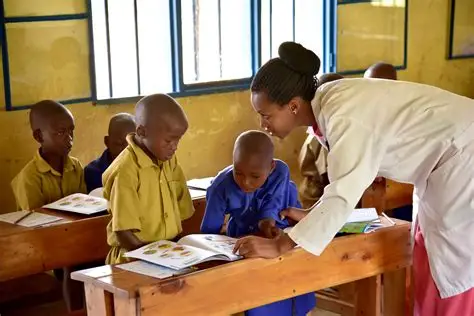
Economic disadvantage affects children across developmental domains — their learning, health, and wellbeing. Children from low-income families are at an increased risk of cognitive, language and social-emotional developmental delays due to reduced access to stimulating learning situations and resources (AIHW 2023).
Increased parental anxiety, depression and family conflict related to financial stress can likewise alter parent-child relationships. In accordance with attachment theory (Bowlby, 1969), inconsistent or stressed caregiving environments can threaten children’s secure lack of focus on emotional self-regulation and social interaction in pre-school and school contexts.
Within early childhood services, these impacts may be observed through:
- Reduced participation in programs due to affordability barriers
- Irregular attendance linked to housing instability
- Increased behavioral or emotional needs
- Limited access to appropriate clothing, nutrition, or learning materials
These challenges highlight the critical role of early childhood educators in recognizing and responding to the effects of economic disadvantage. Educators must adopt inclusive, responsive practices that support children’s engagement and wellbeing while acknowledging the broader structural factors influencing families
Social Policy and Australian Responses
There are a wide range of policies that Australia has introduced to address economic disadvantage — including for families with young children. Key initiatives targeting the provision of early childhood education include the Child Care Subsidy (CCS), which aims to improve affordability and accessibility, as well as Jobseeker and Family Tax Benefit payments that provide financial support to low-income families.
The Early Years Learning Framework (EYLF) places great importance on equity, inclusion and ensuring all children achieve learning outcomes based on their backgrounds (Department of Education, 2022). The National Quality Framework (NQF) encourages high-quality, inclusive early childhood education programs.
It is worth noting that although these policies seek to ameliorate inequality, they are often limited by systemic barriers. For example, by imposing complex eligibility criteria and providing inadequate financial assistance, the most disadvantaged families may not be able to find access. And high housing costs and cost-of-living pressures still add to economic pressure for many families.
This indicates that, although policy frameworks provide a valuable foundation, there is still substantial space for more targeted and accessible supports along with sufficient resource allocation. Early childhood services can help overcome these barriers through practices that support all children and families, as well as referrals to community resources
Strategies for Practice
To effectively support children and families experiencing economic disadvantage, early childhood educators can implement the following evidence-based strategies:
- Inclusive and Equitable Practices
Educators can ensure that all children have access to learning experiences regardless of their financial circumstances by providing resources such as meals, clothing, and learning materials. This aligns with the EYLF’s commitment to equity and inclusion.
- Building Strong, Trusting Relationships
Developing respectful and non-judgemental relationships with families enables educators to better understand their circumstances and provide appropriate support. This reflects Bronfenbrenner’s emphasis on strong microsystem relationships.
- Trauma-Informed Practice
Recognising that financial hardship can be a source of chronic stress, educators can implement trauma-informed approaches, including predictable routines, emotional support, and co-regulation strategies, to promote children’s sense of safety and stability.
- Flexible and Responsive Service Provision
Offering flexible enrolment options, payment plans, and support with accessing subsidies can reduce barriers to participation in early childhood education.
- Connecting Families to Support Services
Educators can act as key connectors by referring families to community organizations, financial counselling, and housing support services, thereby strengthening the ecosystem supports around the child.
Community and Professional Partnerships
Effective support for families experiencing economic disadvantage requires collaboration between early childhood services and external professionals and organisations. Key partnerships include:
- The Salvation Army
Provides emergency relief, financial assistance, and family support services.
- Anglicare Australia
Offers housing support, financial counselling, and community programs for vulnerable families.
- Mission Australia
Supports families through employment services, housing programs, and early intervention initiatives.
- Social Workers
Play a critical role in assessing family needs, providing counselling, and facilitating access to support services.
- Community Health Services
Provide access to healthcare, nutrition support, and developmental services for children.
These partnerships enable a holistic, collaborative approach, ensuring that children and families receive comprehensive and coordinated support.
Resources for Educators and Children
Websites/Programs
- Raising Children Network Provides evidence-based parenting information and support strategies.
- The Smith Family
Offers educational support programs for disadvantaged children. - Good Shepherd Australia New Zealand
Provides financial wellbeing and family support services. - MoneySmart (ASIC)
Offers resources to support financial literacy and wellbeing.
Children’s Books (0–5 years)
- Those Shoes – Maribeth Boelts
- A Chair for My Mother – Vera B. Williams
- The Lunchbox – by Chris Owen
- Maddi’s Fridge – Lois Brandt
These books can support discussions around fairness, empathy, and sharing, helping children understand diverse life experiences.
- Play School (ABC) – Episodes exploring family diversity
- Sesame Street – Content on community and inclusion
3. Bluey – Episodes addressing family life and problem-solving
4. Daniel Tiger’s Neighbourhood – Emotional regulation and social understanding
Critical Reflection
While economic disadvantage remains a persistent issue in Australian society, early childhood education has the potential to act as a protective factor in mitigating its impacts. However, it is evident that systemic inequalities continue to shape children’s opportunities, suggesting that both policy reform and responsive educational practices are essential. By adopting inclusive, relationship-based, and collaborative approaches, educators can play a critical role in supporting children’s development and promoting more equitable outcomes.
Reference List (APA 7th Edition)
Australian Institute of Health and Welfare. (2023). Australia’s children. https://www.aihw.gov.au/reports/children-youth/australias-children
Australian Securities and Investments Commission. (2023). MoneySmart. https://moneysmart.gov.au
Bourdieu, P. (1986). The forms of capital. In J. Richardson (Ed.), Handbook of theory and research for the sociology of education (pp. 241–258). Greenwood Press.
Bowlby, J. (1969). Attachment and loss: Vol. 1. Attachment. Basic Books.
Bronfenbrenner, U. (1979). The ecology of human development: Experiments by nature and design. Harvard University Press.
Department of Education. (2022). Belonging, being and becoming: The early years learning framework for Australia (Version 2.0). Australian Government. https://www.education.gov.au/early-years-learning-framework
Good Shepherd Australia New Zealand. (2023). Financial wellbeing and inclusion programs. https://goodshep.org.au
Mission Australia. (2023). Programs and services. https://www.missionaustralia.com.au
Raising Children Network. (2023). Supporting families and children. https://raisingchildren.net.au
The Salvation Army Australia. (2023). Community support services. https://www.salvationarmy.org.au
The Smith Family. (2023). Learning for life program. https://www.thesmithfamily.com.au
Create Your Own Website With Webador